
Broadleaf, Clover & Noxious Weed Control on Sydney Acreage: A Property Owner’s Guide
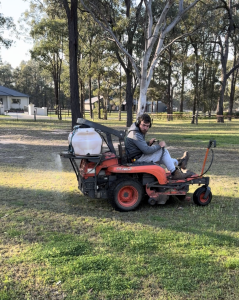
If you own a few acres anywhere between Camden and the Hawkesbury, you’ve probably watched broadleaf weeds and clover take over a paddock faster than you can keep on top of them. Suburban lawn advice doesn’t translate well to acreage – what works on a quarter-acre block with a hand sprayer is hopeless across two or three acres of pasture. This guide walks through what broadleaf and clover weeds actually are, why they spread so aggressively on rural blocks around Sydney, and what proper weed spraying Sydney acreage owners actually need, from timing through to equipment.
What Are Broadleaf Weeds, and Why Do They Take Over Acreage Paddocks?
Broadleaf weeds cover a wide family of plants – thistles, dock, capeweed, bindii, and dandelion among the most common across the Sydney basin – that grow wide, flat leaves instead of the narrow blades of grass. Unlike grass, most broadleaf weeds set seed quickly and spread through wind, livestock, mowing equipment, and even boots and tyres. On a suburban lawn, a broadleaf outbreak is a cosmetic annoyance. On acreage, it’s a bigger problem: broadleaf weeds compete with pasture grass for water and nutrients, some (like capeweed and Paterson’s curse) are toxic to livestock in large quantities, and a paddock left unchecked for even one growing season can go from a handful of weeds to a near-total takeover by the following spring. The scale is what changes the approach – a paddock’s worth of broadleaf weeds needs a different plan than a backyard garden bed.
Clover: Beneficial Pasture Plant or Problem Weed?
Clover sits in an odd spot. In a managed pasture, white or sub clover is often deliberately sown because it fixes nitrogen in the soil and provides good grazing. But on acreage where mowing (rather than grazing) is the main form of management, clover behaves more like a weed than a benefit. It out-competes fine turf grasses, forms dense low mats that smother other pasture species, and its flowers attract bees in large numbers – a real hazard if you’ve got kids, pets, or contractors walking the property regularly. Clover also holds moisture differently to grass, which can leave patches of a mowed paddock looking uneven or slippery underfoot after rain. Whether clover is worth keeping usually comes down to how the land is actually used: grazing land can often tolerate it, while acreage that’s mowed and walked regularly is usually better off with it controlled.
Noxious Weeds: A Legal Obligation, Not Just a Nuisance
Broadleaf weeds and clover are largely a management choice, but some of the plants found on Sydney acreage blocks fall into a different category altogether. What used to be called “noxious weeds” under the old Noxious Weeds Act 1993 are now legally termed Priority Weeds under the NSW Biosecurity Act 2015 – and every landholder carries a General Biosecurity Duty to control them, regardless of whether the property is
grazed, mowed, or simply left as acreage. Species like blackberry, lantana, African lovegrass, serrated tussock, and fireweed are common across Sydney’s rural fringe and are specifically listed in the Greater Sydney Regional Strategic Weed Management Plan, with local councils acting as the enforcing authority. Ignoring a known noxious or priority weed infestation isn’t just a missed spraying round – councils can issue a biosecurity direction requiring control within a set timeframe, and non-compliance can carry real penalties. Most property owners still use the term “noxious weeds” day to day, and that’s fine for describing the problem, but it’s worth knowing the legal framework has changed if a council weeds officer ever gets in touch about your property. If you’re not sure whether something growing on your block is a noxious/priority weed or just an ordinary broadleaf nuisance, it’s worth getting it identified properly before deciding how – and how urgently – to treat it, since the control method and legal timeline can both differ significantly from routine weed spraying Sydney acreage owners do for broadleaf and clover.
Why Acreage Blocks Need a Different Approach to Weed Spraying
A one-litre pump sprayer and a Saturday afternoon might handle a suburban garden bed, but it won’t touch two acres of broadleaf infestation before the weeds have already reseeded. Acreage weed spraying is a volume and coverage problem as much as a chemical one – it requires boom sprayers or vehicle-mounted tank systems capable of covering a paddock evenly in a single pass, correctly calibrated to avoid over-application (which wastes product and risks damaging pasture grass) or under-application (which just breeds herbicide-resistant weeds over time). Terrain matters too – Sydney’s rural fringe includes plenty of sloped, uneven, and partially treed blocks where a contractor with the right equipment can cover the ground safely and evenly, where DIY equipment often can’t reach or can’t cover consistently.
The Best Time of Year for Weed Spraying on Sydney Acreage
Timing has more impact on results than almost any other factor. Broadleaf weeds and clover are easiest to control while they’re actively growing and before they set seed – in the Sydney basin, that generally means late autumn through to early spring, when cooler, wetter conditions bring on a flush of new growth. Spraying in the middle of a hot, dry Sydney summer is largely wasted effort: most broadleaf weeds slow their growth and stop absorbing herbicide effectively, and you risk drift onto pasture grass that’s already under moisture stress. A well-timed spray in the cooler months, followed by a smaller follow-up pass six to eight weeks later to catch anything missed or newly germinated, gets far better results than a single summer spray.
DIY Spraying vs a Professional Weed Spraying Sydney Service
There’s nothing stopping a property owner from doing their own weed spraying, and plenty do – but it comes with real trade-offs on acreage. Herbicide selection matters: broadleaf-selective products won’t necessarily touch clover, and vice versa, so getting the mix wrong means paying for chemical and labour twice. Calibration matters too – too strong a mix can scorch pasture grass and leave bare patches that other weeds move straight into; too weak and you’re just slowing the weeds down rather than killing them. A professional weed spraying Sydney service brings calibrated equipment, the right product for the specific weed mix on your block, and enough coverage capacity to treat the whole property in one visit rather than spreading the job across several exhausting weekends. For anyone managing a Sydney acreage property alongside work, kids, or livestock, that time saving is often the real value.
What to Expect from a Professional Weed Spraying Sydney Visit
A proper acreage weed spraying visit starts with a walk of the property to identify what’s actually growing – broadleaf weeds and clover often need different products, and a mixed infestation might need a combined or sequential treatment. From there, a contractor with boom or vehicle-mounted spray equipment can treat several acres in the time DIY equipment would take to cover a quarter of that area, with even coverage that reduces the missed patches and streaking that come from manual spraying. Most acreage properties around Sydney do well on a twice-yearly program – a main spray through the cooler months and a smaller follow-up in spring – rather than reactive spraying once weeds have already taken hold.
Signs You’re Overdue for Weed Spraying
A few warning signs are worth watching for between scheduled sprays. Patches of unusually dark green or noticeably different-textured growth scattered through a paddock are often the first visible sign of a broadleaf outbreak starting, well before it’s obvious from a distance. A sudden increase in bee activity across a mowed area usually means clover has flowered, which is worth acting on quickly if the property gets regular foot traffic. And any area where mowed grass looks patchy or thin despite otherwise even growth is worth a closer look – it’s often broadleaf weeds or clover outcompeting the grass underneath rather than a mowing or irrigation issue. Catching any of these early keeps a weed spraying Sydney visit a straightforward, single-pass job rather than a bigger renovation project.
Broadleaf and Clover Weeds Across Sydney’s Rural Fringe
The specific weed mix varies a bit by soil type and rainfall, but broadleaf and clover problems show up consistently on acreage blocks from Appin and Bargo through to Camden and the Hawkesbury. Heavier clay soils around the southwest tend to favour thistle and dock, while sandier or better-drained blocks further out often see more capeweed and clover establish early in the cooler months. None of this changes the basic approach to weed spraying Sydney acreage owners need, but it’s worth mentioning to a contractor so the herbicide mix is matched to what’s actually growing on your specific block rather than a generic pasture blend.
Keeping Weeds From Coming Back
A single spray, however well timed, rarely solves a broadleaf or clover problem for good – most rural blocks need an ongoing program rather than a one-off treatment. Bare patches left after a heavy spray are prime real estate for new weed seed to germinate, so overseeding with pasture grass after treatment helps crowd out the next flush before it establishes. Regular mowing between spray rounds also helps, since it stops surviving weeds from setting seed even if it doesn’t kill them outright. Property owners who pair a twice-yearly weed spraying Sydney program with reasonably consistent mowing tend to see the weed load drop noticeably within twelve to eighteen months, rather than fighting the same infestation every season.
Weed Spraying Alongside Regular Mowing
Weed control and mowing work best as a pair rather than two separate jobs booked in isolation. A property that’s mowed regularly but never sprayed will still see broadleaf weeds and clover creep in around the edges and any patchy or thin areas of pasture, since mowing alone doesn’t kill established weeds, just keeps them short. Conversely, a property that’s sprayed but rarely mowed often sees the treated areas get outcompeted again quickly once other grass and weeds regrow unchecked. Coordinating the two – weed spraying Sydney property owners book ahead of the main growth season, paired with a consistent mowing schedule the rest of the year – tends to produce a noticeably better-looking, easier-to-manage paddock than either service used on its own.
Broadleaf weeds and clover aren’t going anywhere on their own, and on acreage the cost of leaving them is bigger than it looks from the house – lost pasture, an unmanageable mowing job by summer, and paddocks that look neglected even when the rest of the property is well kept. If you’re planning your weed spraying Sydney program for this season, or you’ve inherited a paddock that’s gotten away from the previous owner, get in touch for a free on-site assessment and quote.