
How Often Should You Mow an Acreage Property in Sydney? A Seasonal Guide
One of the most common questions from new acreage owners around Sydney isn’t how to mow a large property, it’s how often. Suburban lawn advice – mow weekly, or fortnightly in summer – doesn’t map cleanly onto a one, two, or five-acre block, where growth rates, grass type, and the sheer time a full mow takes all change the calculation. This guide breaks down acreage mowing Sydney property owners should expect season by season, and what actually happens if you fall behind.
Why the Question Keeps Coming Up
It’s a fair question to ask, because the honest answer is genuinely more complicated than a single number. Unlike a suburban lawn, where most owners eventually settle into a fixed weekly or fortnightly habit without much thought, an acreage property forces the question back into view every season as growth conditions shift. New owners in particular tend to either overcommit early – booking a tight schedule that’s more than the property actually needs through winter – or undercommit and end up needing an expensive slashing catch-up once spring growth outpaces an infrequent schedule. Getting a realistic read on the pattern for your specific block, rather than guessing from general advice, is usually worth doing in the first few months of owning an acreage property.
Why Acreage Mowing Frequency Is a Different Question to Suburban Lawn Care
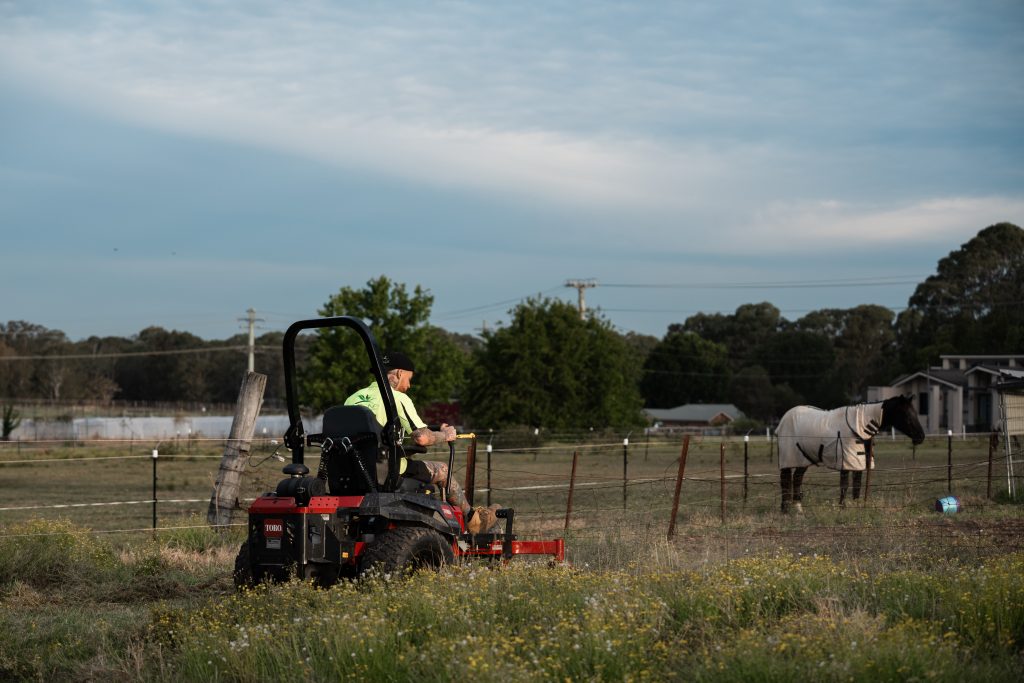
A suburban lawn mowed weekly rarely gets away from the owner – even a missed week or two is easy to catch up on with a standard mower in twenty minutes. An acreage property is a different equation. Mowing two or three acres can take several hours even with a ride-on, which means the real question isn’t “how often would be ideal” but “how often is realistically achievable” – and falling behind on acreage compounds fast, because taller grass takes longer to cut, is harder on equipment, and often needs slashing rather than mowing once it’s gotten away. That’s why most acreage mowing Sydney schedules are built around growth stage rather than a fixed weekly or fortnightly rule.
Spring: The Fastest Growth of the Year
Spring is when Sydney acreage properties need the most frequent attention. Warmer temperatures and (usually) reliable rain bring on rapid growth, and a paddock that looked tidy three weeks ago can be knee-high again by the time you get back to it. Most acreage properties need mowing every two to three weeks through spring to stay ahead of growth, and if a property has been neglected over winter, an initial slash may be needed before regular mowing can resume – regular mowers aren’t built to handle heavily overgrown grass in one pass.
Summer: Growth Slows, But Fire Risk Doesn’t
Growth typically slows through the hotter, drier stretches of a Sydney summer, which can tempt owners to stretch out the interval between mows. The catch is fire risk – long, dry grass is exactly the fuel load that bushfire mitigation rules are designed to reduce, and many rural properties have specific obligations to keep grass below a certain height through fire season regardless of how fast it’s actually growing. A four to six week interval is common through summer on properties without heavy irrigation, but it’s worth treating the mowing schedule as a fire safety task as much as a tidiness one during this stretch.
Autumn: A Second Growth Flush
Cooler temperatures paired with autumn rain often bring a second, smaller growth spurt before winter dormancy sets in. Acreage mowing Sydney properties typically need during this period sits similar to spring – roughly every three weeks – though it tapers off as the season moves into cooler, drier weeks toward winter.
Winter: The Quietest Season for Growth
Winter is when most Sydney acreage properties can stretch mowing out to every six to eight weeks, sometimes longer depending on rainfall and grass type. It’s also a practical window for other property maintenance – slashing overgrown edges, clearing fence lines, or tackling weed spraying while growth is slow enough that a single pass keeps things under control for longer.
What Happens When You Fall Behind
Missing a mow on a suburban lawn is a minor inconvenience. On acreage, falling behind has real knock-on effects: overgrown grass becomes a fire hazard, a haven for snakes and ticks, and eventually too tall for a standard ride-on mower to handle at all, requiring a slashing pass first at extra cost before regular mowing can resume. It also makes weed problems harder to spot and treat early, since broadleaf weeds and clover can establish and seed well before they’re visible above longer grass. Staying roughly on schedule, even if the exact interval flexes with the season, is almost always cheaper and easier than catching up after falling behind.
Grass Type and Rainfall Change the Answer
Every guide to acreage mowing Sydney property owners will read has to come with a caveat: grass type and local rainfall shift the ideal frequency more than the season alone. Kikuyu and couch, common on many rural fringe blocks, grow noticeably faster than fescue-based pasture and generally need more frequent attention through the warmer months. Properties with irrigation, dams, or naturally higher rainfall (the Hawkesbury and parts of the Southern Highlands fringe, for instance) will often need mowing more often than a drier block on the western fringe, even in the same season. A contractor familiar with your specific area can usually judge this more accurately than a generic seasonal rule.
Setting Up a Realistic Mowing Schedule
The properties that stay looking consistently well kept year-round tend to have one thing in common: a standing schedule rather than an ad hoc, reactive approach. Booking acreage mowing Sydney services on a recurring basis – adjusted seasonally rather than fixed year-round – means the property never gets far enough behind to need an expensive slashing catch-up, and it takes the mental load of “when did we last mow” off the owner’s plate entirely. For anyone managing a large property alongside work and family, that predictability is often worth more than the mowing itself.
Commercial and Council Land Follows a Similar Pattern
The same seasonal logic applies to larger commercial and council-managed land across Sydney, just at a bigger scale. Sports fields, reserves, and roadside verges follow the same spring growth spike and winter slowdown as private acreage, and the same risk applies if mowing schedules aren’t adjusted for the season – a reserve mowed on a fixed fortnightly schedule year-round will look overgrown in spring and unnecessarily manicured (at wasted cost) in winter. Councils and commercial property managers that build seasonal flexibility into their mowing contracts generally get better presentation for a similar or lower total annual cost than a fixed, unchanging schedule.
Signs Your Mowing Schedule Needs Adjusting
The seasonal guide above is a starting point, not a fixed rule, and a few signs suggest it’s time to adjust rather than stick to the calendar. If grass is visibly seeding before the next scheduled mow, the interval is too long for that stretch of the year. If a ride-on is regularly struggling or bogging down in thick growth, that’s usually a sign the acreage mowing Sydney schedule needs tightening, or that a slashing pass is overdue. And if weed patches keep appearing in the same spots despite regular mowing, it’s often less about mowing frequency and more a sign those areas need a weed spraying pass alongside the mow, since mowing alone won’t clear an established weed problem.
Ride-On vs Slashing: Matching the Equipment to the Job
Part of the acreage mowing Sydney equation is equipment, not just timing. A ride-on mower handles regularly maintained pasture well, cutting cleanly and evenly on a set schedule. Once grass gets away – past knee height, or after a season of neglect – a ride-on often can’t handle it safely or effectively, and a slashing pass (using heavier-duty equipment built for overgrown vegetation) is needed first to bring the property back down to a level a standard mower can maintain going forward. Knowing which one a property needs at any given time, rather than defaulting to whichever is booked, avoids either an ineffective mow or an unnecessarily expensive slash.
Getting the frequency right for your specific property depends on grass type, rainfall, slope, and how the land is used – there’s no single number that fits every block. If you’re not sure where your property sits, or you’ve fallen behind and need a first pass to get back on track, get in touch for a free on-site assessment and an acreage mowing Sydney schedule that actually fits your land.