
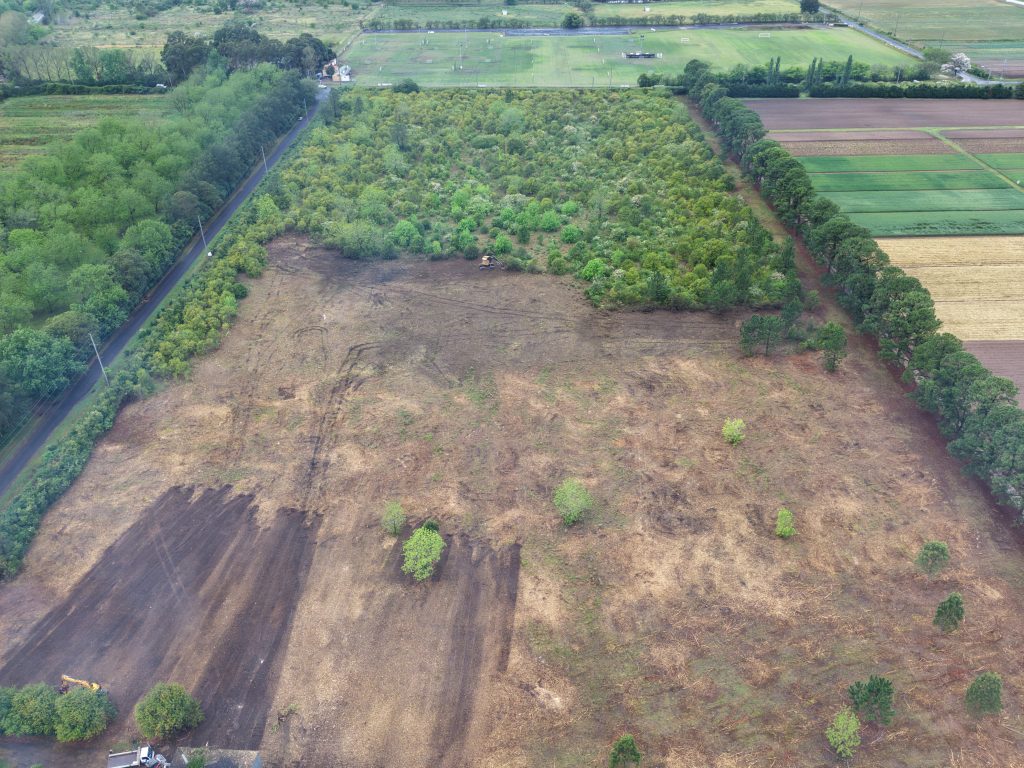
Fire Break Clearing on Sydney Acreage: What to Clear Before Bushfire Season
Every spring the same thing happens on rural and acreage blocks across Sydney. The grass shoots up after winter, the undergrowth thickens along the fence lines, and the bushfire danger period starts before most owners have thought about it. A fire break is one of the simplest and most effective things a landholder can do to prepare, but only if it is done properly, in the right place and within the rules. This guide explains what fire break clearing Sydney property owners actually need to know: what a fire break is, what you can clear without separate approval, where the limits sit, and how the work is usually done.
What a Fire Break Actually Does
A fire break is a strip of land where fuel has been reduced or removed, so a fire has less to burn and is easier to slow, stop or defend. It does not make a property fireproof, and on its own it will not stop a fire driven by strong wind and embers. What it does is reduce the amount of fuel near your house, sheds and boundaries, give firefighters a safer place to work and a way to move vehicles, and lower the intensity of a fire as it approaches. On acreage, where the distance between the bush and the house is often short, that reduction in fuel can change how a fire behaves when it arrives. Good fire break clearing Sydney landholders carry out each year is really fuel management: keep grass short, remove dense scrub and low branches, and break up the continuous fuel that carries fire across a property.
Why Timing Matters: the Danger Period Has Already Started
In most of NSW the statutory bush fire danger period runs from 1 October to 31 March, although local councils can vary the dates. That means it has already begun across much of Sydney’s rural fringe. During the danger period you generally need a fire permit to light a fire in the open, so burning off a pile of cleared scrub is rarely a practical option once the season is under way. Booking fire break clearing Sydney contractors early also matters for a simpler reason: demand climbs quickly once the weather warms up and fire danger ratings start appearing in the news. If your block carries heavy grass or dense regrowth, the time to arrange the work is before the hot, dry stretch arrives, not during it.
Know the Rules: the 10/50 Vegetation Clearing Entitlement
Clearing vegetation in NSW is regulated, and clearing native vegetation without approval can carry serious penalties. The main exception for bushfire protection is the 10/50 Vegetation Clearing Entitlement. If your property is inside a designated 10/50 Vegetation Clearing Entitlement Area, you can clear trees within 10 metres of a dwelling, and clear shrubs and other underlying vegetation (but not trees) within 50 metres of it, without separate approval. The clearing must follow the 10/50 Code of Practice, and clearing done outside that code is unlawful. The Rural Fire Service has a look-up tool on its website to check whether your address falls inside an entitlement area, and it is the first thing to check before any fire break clearing Sydney landholders plan near a house.
Where the 10/50 Entitlement Stops
The entitlement has limits, and they catch people out. A Penrith City Council fact sheet, for example, lists restrictions on removing trees or heavily pruning them on slopes steeper than 18 degrees, no clearing within 10 metres of a river or lake, no clearing in mapped wetlands, and no clearing where critically endangered plants or ecological communities are present. Cumberland Plain Woodland and Shale Sandstone Transition Forest are protected communities in parts of Western Sydney. Herbicide use is also restricted under the code, and harming protected wildlife can still lead to prosecution. Rules differ between council areas and between properties, so for anything beyond routine grass management it is worth checking with your council or the RFS before clearing starts, rather than assuming the entitlement covers the whole job.
Fire Breaks Beyond the House: Boundaries, Tracks and Dams
On acreage, fire preparation is more than the area around the house. Boundary fire breaks along fence lines slow a fire coming from a neighbouring block or bushland. Access tracks need to be clear and wide enough for a tanker to drive in and turn around, because firefighters cannot defend what they cannot reach. Water sources such as dams and tanks need clear access too, so a pump or hose can be set up quickly. And the paddocks themselves matter: long, dry grass is fast-burning fuel, so keeping it short, particularly nearest the house and sheds, does more than most people expect. The exact width and standard of a fire break depends on your property, its bushfire attack level and council or RFS guidance, so confirm the requirement before clearing to a rough guess.
How Fire Break Clearing Is Actually Done
There are three main methods, and most jobs use a combination. Slashing and mowing handle grass and light weeds, cutting them short in a single pass. It is fast, economical and well suited to open paddocks and boundary strips. Forestry mulching handles the heavier material: scrub, saplings and dense regrowth are shredded on site by a mulching head fitted to an excavator, leaving a layer of mulch instead of a pile to burn or cart away. It works well on slopes and in tight spots where other machinery struggles. Weed spraying keeps regrowth down once the area is cleared, particularly along tracks and fence lines where grass and weeds return quickly. For many properties, the most effective fire break clearing Sydney owners can arrange is a slashed or mulched strip that is then sprayed and kept short through the season.
Why Mulching Often Beats Burning and Stacking
Many owners still think of fire break work as cut it, stack it, burn it. During the danger period that approach has real problems: you will usually need a permit to light a fire, burning is often banned on high-risk days, and a stack of dry cut material sitting near the house is a fire hazard in itself. Mulching avoids most of that. Tall, continuous fuel is turned into a low, compact layer in one pass, and nothing needs to be burned or trucked away. On sloping ground the mulch also helps hold soil in place until grass re-establishes, which reduces erosion after heavy rain. Close to buildings, many owners prefer a bare or low-grass surface to a deep mulch layer, so it is worth agreeing this with your contractor beforehand. Our guide to land mulching in Sydney covers the comparison in more detail.
What to Prepare Before the Contractor Arrives
A little preparation makes the job quicker and safer. Check your 10/50 status with the RFS and note anything your council has said about vegetation on the property. Walk the area and mark hazards such as large rocks, stumps, old fencing, irrigation lines, septic systems and underground services. Let the contractor know about wet or boggy ground, steep sections, and any trees or native plants you want kept. If clearing runs near a boundary, it is courteous to let your neighbours know. Having this information ready helps a contractor plan the method and gives you a more accurate quote on your fire break clearing Sydney job.
Keeping a Fire Break Working All Season
A fire break is not a one-off job. Grass can regrow within weeks after spring rain, and a strip that was clear in October can be fuel again by December. A practical routine is to clear in spring, slash or mow every few weeks while growth is strong, spray the edges and tracks to slow regrowth, and recheck the area before each hot spell. Properties that skip the follow-up often end up paying for a second full clear in mid-summer, when contractors are at their busiest. Setting up a regular schedule early is usually cheaper and less stressful than catching up under pressure.
Common Fire Break Mistakes
A few mistakes come up again and again. Clearing before checking the rules, and ending up with an enforcement notice or a restoration order. Clearing the wrong area, such as a wide strip along a back fence while overgrown scrub sits right next to the house. Leaving cut material stacked beside buildings. Forgetting access, so the fire break is clean but a tanker cannot reach it. Neglecting maintenance, so the break has regrown by the time it is needed. And choosing on price alone, without checking that the contractor understands the local rules and carries proper insurance. A walk of the property with an experienced operator before any machinery starts will usually catch most of these. That kind of planning is what separates fire break clearing Sydney landholders can rely on from a rushed job.
Choosing a Fire Break Clearing Contractor
A good contractor walks the property before quoting, asks about the 10/50 status and any mapped vegetation or waterways, and explains which method suits which part of the block. Ask what equipment they use, whether they carry public liability insurance, and how they handle sloping or wet ground. Be wary of anyone who quotes sight unseen or tells you not to worry about approvals. Fine Line Lawns clears acreage and rural properties across Sydney with excavator-mounted mulchers, slashers and ride-on equipment, and can combine the fire break clearing Sydney landholders need with weed spraying and ongoing mowing, so the work stays done through the season.
If you have a block that needs a fire break before summer, get in touch for a free on-site assessment and quote. Check your 10/50 status with the RFS first if you can, and we will help with the rest.