
How to Reclaim an Overgrown Property: The Right Order for Clearing, Spraying and Mowing
Buying a neglected block, inheriting a family property, or simply letting a few seasons slip can leave an acreage property in a state where it is hard to know where to begin. The grass is waist-high, the weeds have gone to seed, scrub has crept across the paddocks, and the fence lines have vanished. Overgrown property clearing Sydney landholders arrange tends to go wrong when jobs are done in the wrong order: mowing before clearing, spraying before weeds are growing, or clearing without checking approvals. This guide sets out a sensible order of attack, so each step makes the next one easier and cheaper.
Step 1: Walk the Property and Make a Plan
Start by walking the whole block. Note where the worst growth is, what kind it is (grass, weeds, woody scrub, trees), where the access points are, and what hazards you can see: old fencing, rubbish, stumps, holes, dams, steep ground. Take photos and mark problem areas on a simple map. Check whether the land is in a bushfire prone area, whether there are mapped waterways or native vegetation, and whether any trees are protected. A contractor can do much of this with you, and a good one will give you a staged plan rather than one big quote. A clear picture at this stage stops you paying for work you cannot legally carry out, or for the wrong method.
Step 2: Check What You Are Allowed to Clear
This is the step most people skip. In NSW, clearing native vegetation can require approval even on your own land, and penalties for unapproved clearing can be heavy. Routine grass management and weed removal are generally fine, but scrub, saplings and trees are different, and the rules depend on the vegetation type and your council. Properties inside a designated 10/50 area have an entitlement to clear near dwellings for bushfire protection, with limits. When in doubt, check the NSW Native Vegetation Regulatory Map, speak to your council or Local Land Services, and get written confirmation before any significant overgrown property clearing Sydney owners plan. Our guide to land clearing in Sydney covers the approvals in more detail.
Step 3: Identify the Weeds Before You Cut Anything
Some weeds are more than a nuisance. Under the NSW Biosecurity Act 2015, landholders have a general biosecurity duty to control priority weeds, which is the modern name for what used to be called noxious weeds. Species such as blackberry, lantana, African lovegrass and fireweed turn up regularly on Sydney’s rural fringe, and some can spread when they are cut or carried on machinery. Identify what you have before work starts, so the right tool is used and weed seed is not spread across the property. If you are not sure, get it identified. Our guide to broadleaf, clover and noxious weed control explains what to look for and how it is treated.
Step 4: Clear the Woody Growth First
Heavy vegetation comes out before anything else. Scrub, saplings, dense regrowth and fallen branches stop mowers, slashers and spray rigs from doing their jobs, and they hide hazards. Forestry mulching is often the quickest way to deal with it: an excavator-mounted mulching head shreds the material in place, leaving a layer of mulch rather than piles to burn or cart away. Trees that need to stay, or that need pruning or removal, are best assessed by an arborist at this stage so the clearing works around them. Overgrown property clearing Sydney owners book is judged by what is left behind as much as what is taken, so agree beforehand what stays and what goes.
Step 5: Slash the Grass and Weeds
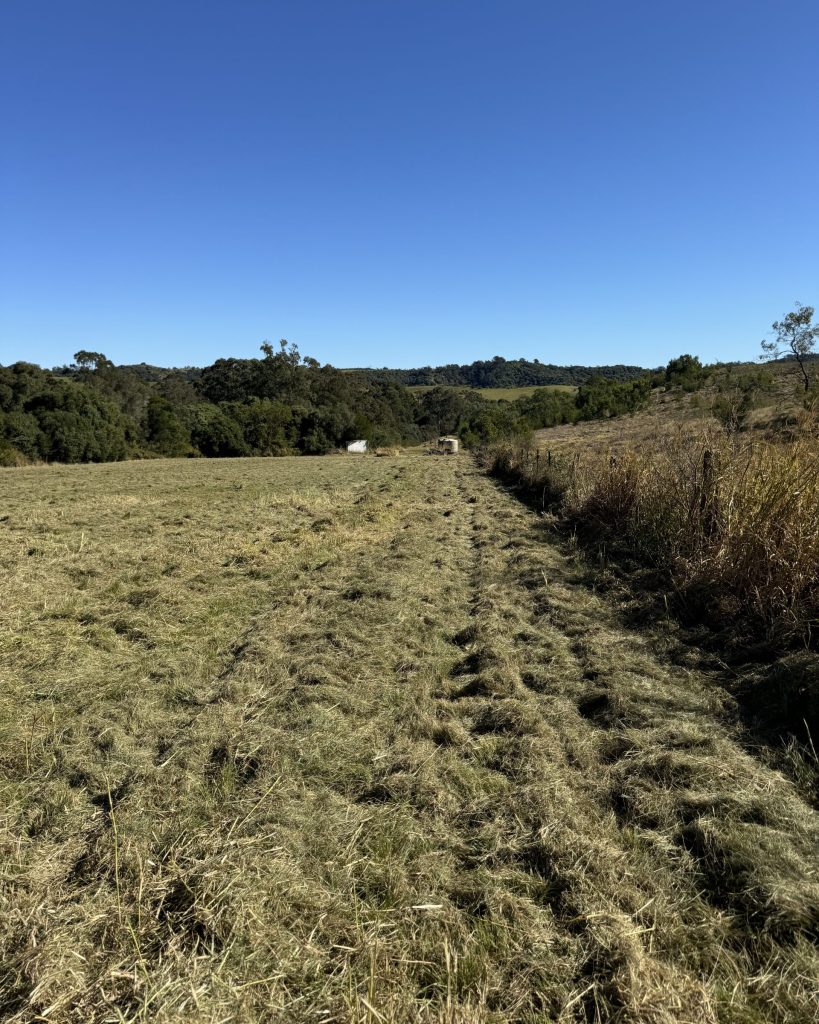
Once the woody growth is dealt with, slashing resets the grass and weeds to a manageable height. It opens up the ground, exposes anything hidden, and cuts the fire load. A slasher will handle growth that a ride-on mower cannot, and it can be done quickly across large areas. Do not expect a neat finish at this stage, because the aim is to reset, not to polish. If you are not sure whether you need a slash or a mow, our slashing versus mowing guide explains the difference.
Step 6: Spray the Weeds While They Are Growing
Weed spraying works best on actively growing plants, so it usually pays to wait for fresh regrowth after the slash, often a few weeks, and then spray. Herbicide is taken up more effectively through fresh leaf than through old, tough or drought-stressed growth, and a slashed stand of weeds often puts out new foliage that is easier to treat. Broadleaf weeds, clover and priority weeds may each need different products, so match the treatment to what you identified in step 3. Spraying before the cut wastes product on plants that are about to be removed, and spraying long after leaves weeds free to set seed again. A follow-up pass six to eight weeks later picks up what was missed.
Step 7: Mow to Maintain
Only now does regular mowing begin. After the reset, a ride-on mower can keep the property tidy on a schedule that suits the season, with shorter intervals in spring and longer ones in winter. Mowing regularly stops weeds from seeding, keeps fire risk down and prevents the property sliding back into the state it started in. Our seasonal guide to how often to mow acreage in Sydney gives rough intervals for each time of year.
Why the Order Matters
Each step sets up the next. Clearing first gives machinery access and reveals hazards. Slashing exposes the ground and brings weeds back into fresh growth. Spraying then hits actively growing plants rather than dead stalks. Mowing locks in the result. Do overgrown property clearing Sydney jobs in the wrong order and you pay more: a mower on uncleared scrub gets damaged, a spray on drought-hardened weeds does little, and clearing without a plan can undo itself in a single season. Staging the work also spreads the cost, which is helpful on a large property.
What a Good Contractor Does on the First Visit
A good contractor starts by walking the property with you, not by quoting from a photo. They will ask what the land is used for, what you want kept, and when you need the work finished. They check access, look for hazards such as stumps, rocks and old fencing, flag anything that might need approval, and explain which method suits which part of the block. You should come away with a staged plan and a clear price for each stage. If you are comparing overgrown property clearing Sydney contractors, treat a willingness to explain the order of work as a good sign, and be cautious of anyone who proposes a single method for the whole block.
Common Mistakes When Reclaiming a Property
Most problems with overgrown blocks come from a handful of mistakes. Owners mow before clearing and wreck a mower on hidden debris. They spray weeds that are dormant or about to be cut, then wonder why nothing happened. They clear vegetation without checking approvals, and end up with a notice instead of a tidy block. They spread weed seed on machinery, or leave piles of cut material next to buildings in fire season. And they treat the clean-up as a one-off, so the property is overgrown again a year later. A realistic plan for overgrown property clearing Sydney landholders can stick to avoids all of these.
How Long Does It Take, and What Does It Cost?
Every property is different, and an honest answer depends on the size, the density of the growth and the access. A modest block with mostly grass and light weeds might be reset in a day or two. A larger, heavily overgrown property with scrub, trees and weed infestations can run across several stages over weeks or months. Costs for overgrown property clearing Sydney jobs follow the same pattern, and it pays to be wary of any fixed price quoted without seeing the land. A site inspection is the only reliable way to price the job. Staging also lets you tackle the highest-risk areas first, such as the area around the house and the access tracks ahead of fire season.
Keep It From Getting Away Again
Reclaiming a property is only half the job. Without maintenance, regrowth returns within a season. Set up a simple routine: regular mowing, a twice-yearly weed spray, a seasonal check of fire breaks and fence lines, and an annual look at the trees. Many owners find it easier to have one contractor look after the lot, so nothing falls between the cracks. Fine Line Lawns provides overgrown property clearing Sydney acreage owners can rely on, from the initial clearing and slashing through to weed spraying and ongoing mowing.
If you have a property that has got away from you, get in touch for a free on-site assessment and a staged plan that fits your budget and your timeline.